
What Makes ERP Essential for Integrated Business Management?
I’ve seen companies hit a wall not because they lacked customers or revenue, but because their internal systems couldn’t keep up. Sales would close deals faster than operations could process them. Finance would spend days reconciling numbers pulled from three different tools. Inventory reports never quite matched what was physically in stock. Everyone was working hard, just not working from the same version of reality.I’ve seen companies hit a wall not because they lacked customers or revenue, but because their internal systems couldn’t keep up. Sales would close deals faster than operations could process them. Finance would spend days reconciling numbers pulled from three different tools. Inventory reports never quite matched what was physically in stock. Everyone was working hard, just not working from the same version of reality.
That’s usually the point where ERP enters the conversation. And before any implementation begins, leadership often asks a simple but important question: what is ERP, and why does it matter so much once a business starts scaling?
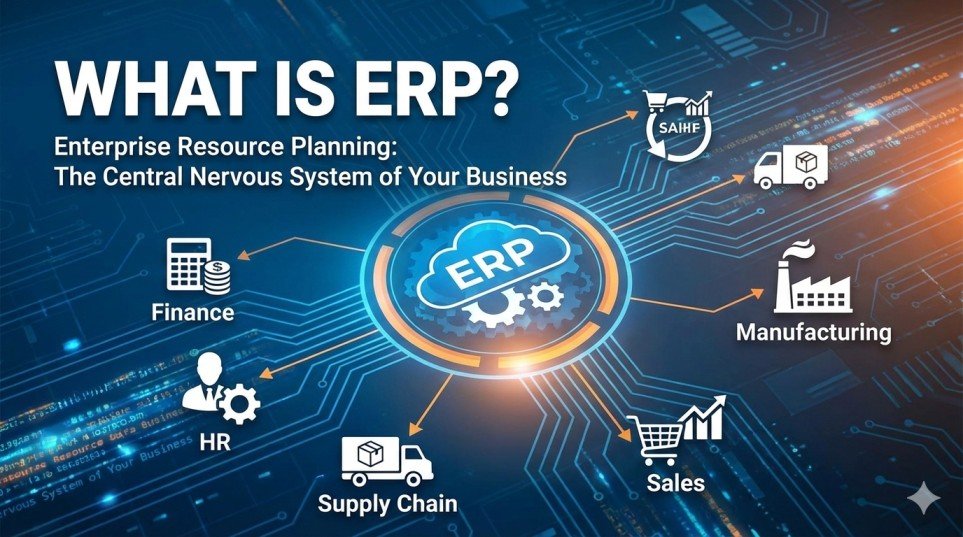
ERP isn’t exciting software. It doesn’t sit on the front page of your website. But inside the business, it quietly determines how smoothly everything runs. Instead of separate tools for accounts, stock, HR, purchasing, and order management, ERP brings those processes under one structured system. When a purchase order is raised, inventory updates. When goods are received, accounting reflects the cost. When a sales invoice is issued, revenue is recorded without someone retyping the same data elsewhere.
The difference shows up in decision-making. Leadership stops waiting for manually prepared reports. Department heads don’t argue over numbers pulled from different spreadsheets. There’s a shared data backbone, and that changes the tone of operational discussions.
Another shift ERP brings is discipline. Informal approvals and email-based tracking may work for a small team. They don’t work when you scale. ERP forces workflows to be defined properly who approves what, what gets recorded, what gets tracked. That kind of structure cuts down avoidable mistakes and helps you spot process slowdowns before they turn into bigger operational issues.
As the business matures, ERP stops feeling like just another system in the stack. It becomes the control layer behind everyday operations. It helps finance teams stay on top of their numbers without last-minute scrambling. Audits become more manageable because the records are already organized, closing the books takes less time, and planners aren’t second-guessing the data in front of them. In practical terms, it simply makes daily operations smoother, fewer unexpected issues, fewer manual fixes, and a lot less operational noise to deal with.
Integrated business management isn’t about adding more tools. It’s about building a stable operational core. ERP provides that core, not as a trend, but as infrastructure that keeps a growing business from becoming operationally fragile.
One area where ERP proves its value is cross-functional accountability. When systems are disconnected, it’s easy for teams to shift blame — sales blames operations, operations blames procurement, finance questions everyone’s numbers. With ERP, transactions are traceable. Every entry has a source, every change leaves a record. That transparency creates ownership. Teams stop relying on assumptions and start relying on documented processes. Over time, that changes company culture as much as it improves efficiency.
ERP also prepares a business for expansion in ways that aren’t obvious at first. Opening a new branch, adding a warehouse, managing multi-location inventory, or complying with different tax structures becomes far easier when the underlying system is already structured to handle complexity. Instead of rebuilding processes each time the company grows, the framework is already in place. That stability allows leadership to focus on strategy and market opportunities, rather than constantly fixing operational gaps behind the scenes.


0 Comments